Any creativity is impossible without inspiration. Otherwise this is handicraft. And here comes the question — where is it, this is the very inspiration, to take? Answer, at first sight, seems simple - so everywhere: in literature, in art, in music. But the answer is simple only at first glance. Special, if you are a designer. Where to run, and where to look for your muse is completely unclear.
But you have, dear designers, we are. And we have prepared a small selection for you - an overview of classic interior styles with tips, where you can be inspired by them. And since it's summer outside, and suddenly you're going on vacation, then we suggest you combine business with pleasure. And if you can't go on a trip, then you at least read - books are all to help us, as always, basically 🙂
Ancient greek style
You will not surprise anyone with that fact, that we are all somehow originally from ancient Greece. And if not from there, then we should certainly be grateful to the Hellenes for everything, what did they give us. Literature, art, science, philosophy, pedagogy ... and interior. Yes, yes.
What is Greek (or ancient greek) style in the interior?
it — light walls - not smooth, but, rather the opposite. Even better - rough plaster.
These are high light ceilings.
It is a visually holistic floor.. Desirable - tiles. And so that it is not too boring, you can dilute it with mosaics, eg.
It is short, simple furniture, possibly, with carved, forged or iron inserts. And no velvet for you, corduroy and leather.
These are the blinds. And if the curtains, then from natural fabrics - linen or cotton.
These are figurines, sculptures and vases. Big and small. With geometric ornaments or animals. Lviv, eg.
Where to get inspired? Of course, in Greece!
What to watch?
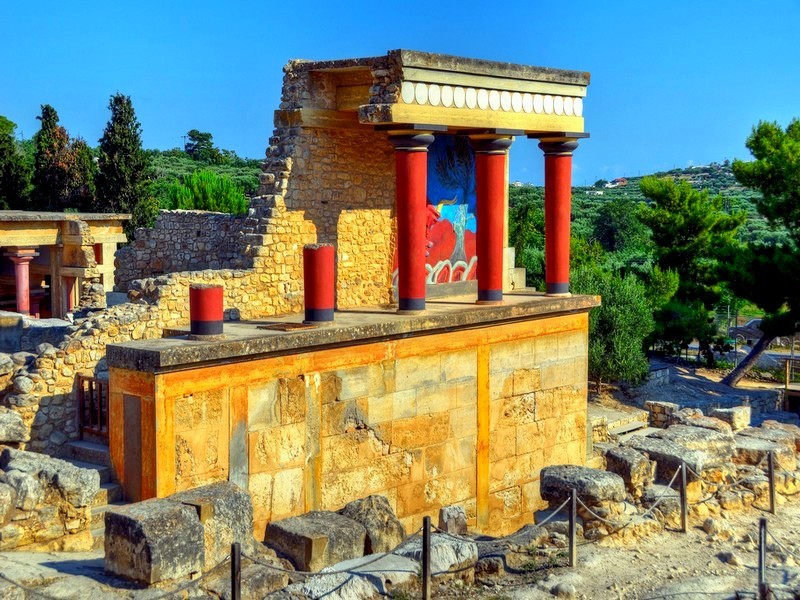
for instance, Knossos palace - a monument of Minoan architecture, made of various types of stone.


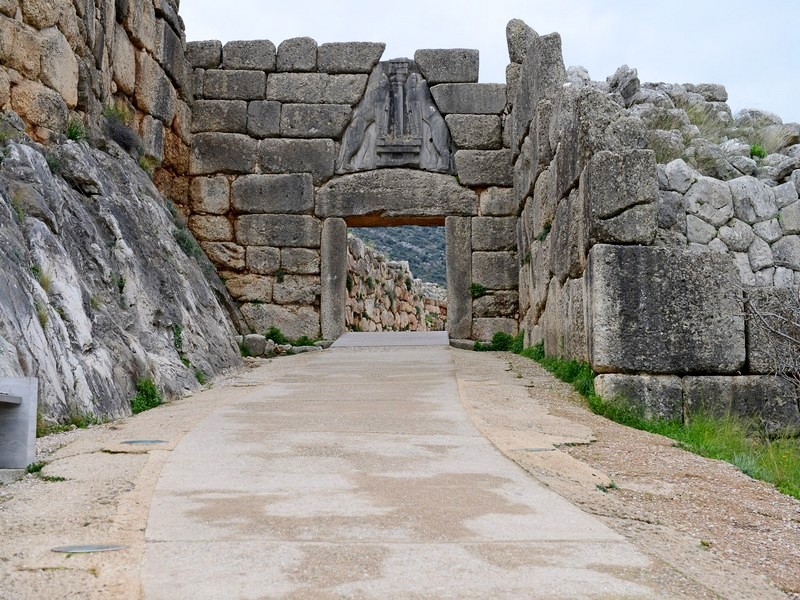
Or Mycenaean walls, built of boulders of enormous thickness. So huge, what, they say, they were built by the Cyclops.

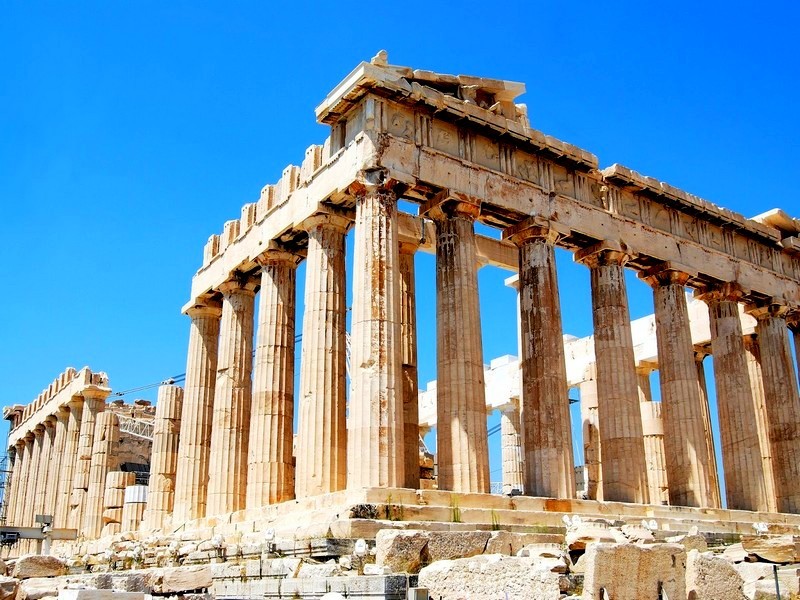
Parthenon - Temple, dedicated to Athena. We are interested in it, first of all, themes, that there is not a single straight line in it - everything is built along a curve. Even the columns are not built strictly vertically..




Erechtheion with beautiful Caryatids instead of columns.

And that's not all, you understand. Hellas is rich in unique architectural solutions and monuments, breathtaking.
But let's go further.
Heir to Ancient Greece - Ancient Rome.
Roman style very similar to greek, but more luxurious and wealthy - to match the Great Roman Empire.
Walls in one color, decorative plaster, painted with imitation marble, frescoes and mosaics.
Mosaic is also allowed in the ceiling. You can also break the ceiling into cells.
Floor - tiles, marble (or its imitation), a rock, mosaic.
Furniture: wicker chairs and beds, lion feet, armchairs with marble bases, animal images, symbolizing power.
Well, and the decor, Roman style, and does allow to indulge in all bad — columns, sculptures (even in human height), painted curtains and pillows, feline skins. Don't limit yourself, in general 🙂
Where to get inspired? Of course in the city, where do all the roads lead!
What to watch?
so or imperial palace on the palatine with an absolutely striking throne room.
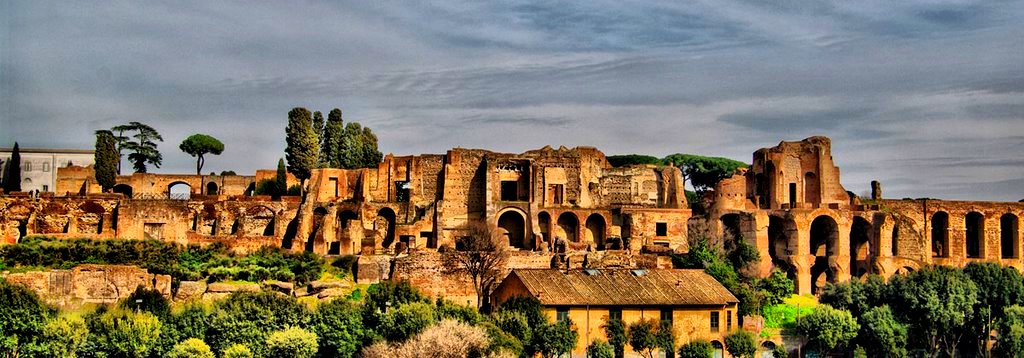
And you go to the Colosseum without our prompts! 🙂
But it's time for us to leave "the affairs of bygone days" and move closer to the days of today - in the Middle Ages.
Here awaits us Roman style interior - massive, harsh and strict. And if for you the phrase "my home is my fortress" is not an empty sound, then you here, to medieval castles.
Ceilings and walls are here in the same color. Moreover, the ceilings can have massive wooden beams and supports.
And the walls are, of course, stone or rough plaster. And in order not to get depressed at all, you can afford a little decor - in the form of wood inserts or stained-glass windows from pieces of colored glass.
Floor - large tiles with imitation stone. Or a tree - dark in color, by itself.
Furniture - rough and primitive in places. Maximum decorations - carving and forging. And don't forget about the chests! They are the integral part of the Romanesque interior..
But even such a harsh style is not complete without decor.: paintings, tapestries, lamps a la candlesticks. And to be absolutely right, put the iron knight somewhere in the corner or in the corridor. Just be careful with him in the dark 🙂
If you want to see the Romanesque style, as the saying goes, Live, then Poland, France (especially France!), Germany are waiting for you! Well, Great Britain, of course, with her Tower!
We cannot list all the buildings in the Romanesque style here - here are a couple of examples.:
Priory of Serrabona in France. When was it built, unknown, but it is known, that the famous Frenchman Prosper Merimee achieved the status of cultural heritage for the monastery.



Church of St. Jacob in German Regensburg.
If you are interested in Romanesque sculpture, then you definitely come here. Here are the men, and lions, and eagles, and much less revered animals — pigs, donkeys and dogs.



Having touched on the medieval theme, its peak and crown cannot be left aside - Gothic.
It is Gothic with its aspiration upward, with its graceful stained-glass windows, with gilding and glass he ordered the gloomy and primitive Romanesque style to "live long".
Gothic ceiling is still stone, but already with stucco and gilding.
Gothic walls are still stone too, but not so boring - wooden inserts do their job.
Gothic floor still, predominantly, stone, but it is Gothic that allows parquetry - even in a dark color.
But Gothic furniture already gives space for creativity - here and velvet, and carving, and canopies. Drawers and drawers. And chests. Still chests.
Knights are still allowed. And carpets, and embroidered tapestries - medieval people loved to embroider 🙂
Where to get inspired by Gothic? Yes, where comfortable, but on condition, that this "anywhere" will be in western Europe.
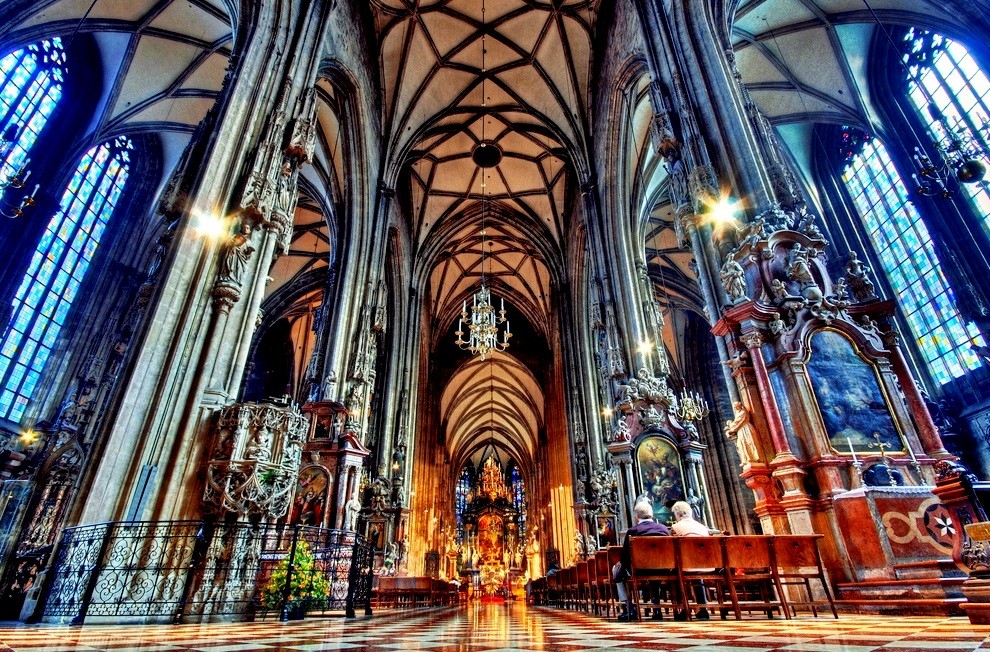
This is also the most important religious building in Austria - St. Stephen's Cathedral in Vienna.



And the symbol of Gothic architecture at its best - Cologne Cathedral




Well Notre dame cathedral, who just can't help but inspire awe of the gothic style.





It's time for us to move on.
From ascetic and austere styles to luxury and grace. Renaissance or Renaissance. Antiquity in the Middle Ages. Wonderful palaces and monumental cathedrals, marble stairs and luxury furniture.
Walls made of marble or smooth stone, decorated with plaster or painting, velvet or brocade. Niches in the walls with bronze statues standing in them.
Vaulted ceiling (if the height allows, of course) with stucco - it's all Renaissance, Yes.
Marble or stone, but imitating marble, floor. Parquet. AND, of course, carpets.
Furniture: forged, openwork, inlaid or gilded, decorated with images of vines or wreaths.
Curtains - with draperies, lambrequins and twisted cords.
Ivory decor items, chests, candlesticks and candelabra. If the pictures, then copies of the famous paintings of the Renaissance - Leonardo, Michelangelo. If the dishes, then porcelain with images is not dishes, and the pictures. Well, Venetian glass, of course…
Where to go, to get inspired by the Renaissance? Route, think, understandable - Italy.
Here, eg, St. Peter's Basilica in Vatican. Luxury and splendor. Famous architects as builders. Must see.






Or a palace built for a banker in Florence. Palazzo Pitti. They say, when placing an order for the construction of the palace, the banker wanted to surpass the famous Medici.
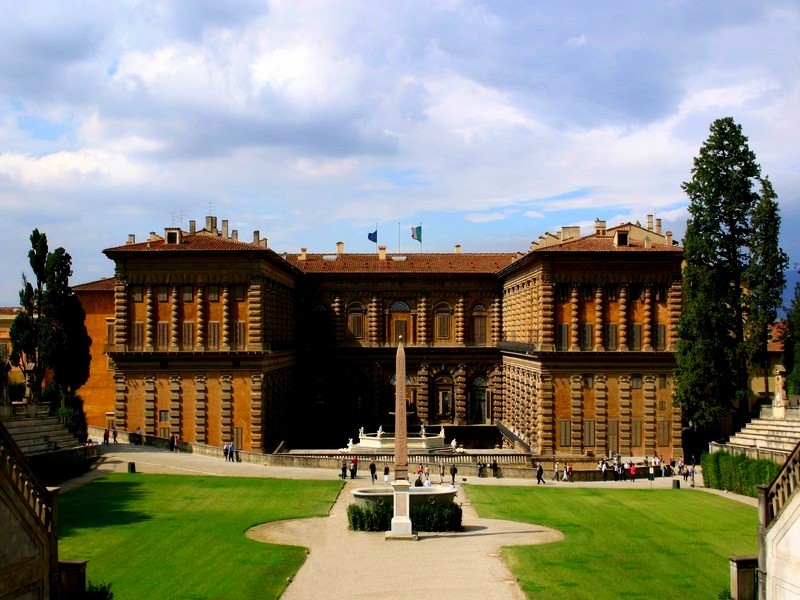
And if, after all, not Italy, and France, then, I think, you can't help but visit one of the examples of Renaissance architecture - famous and beautiful Louvre. Comments are unnecessary here.





And if the Renaissance backs the tone "expensive-rich" in Europe, then the next style successfully continued it. Baroque. And if you want to make your home like this, so that everyone who enters into it understands, that he came to visit a rich and serious man, then you should pay attention to him.
Do not skimp on voluminous decor, sophisticated decorations, columns, gold, bone, marble.
Solid walls no longer fit. Baroque walls are fabric wallpapers or panels, is it plaster or stucco, these are tapestries or brocade. Down with homogeneity and boredom!
The ceiling keeps up with the walls, being their continuation. Stucco, gilding and frescoes.
Floor: first of all, it must match the walls and ceiling, contrasts are not needed here. Marble or wood (parquet or laminate). And carpets, carpets, carpets are not at all boring colors, as you can guess.
Furniture style can be predicted: curved legs, sofas with wavy backs, elegant dressers with drawers, tables with marble tops, beds with luxurious canopies and draperies. And many decorations and inlays - animal heads, female figures. All, what will make your guests freeze in amazement at such luxury.
Decor: painting (copies of Rubens and Rembrandt), sculptures and mirrors in luxurious gold frames, grandfather clocks and boxes, massive candelabra, figurines, porcelain and ivory.
Our advice: for a small apartment, the Baroque style is hardly suitable - only if you use some individual elements. But if you have a big house, a lot of money and I want chic, then you here, yes 🙂
Doors, by the way, yours will also be difficult - like in palaces, preferably bivalve, carved or gilded, with fabric or colored glass inserts.
Not hard to guess, what you can see the baroque in the same Italy.
for instance, here is a luxurious Basilica del Santa Croce in Lecce.

Or the colonnade in front St. Peter's Cathedral in Rome.

And if you decide to leave the continent, then welcome to mexico (yes-yes, there is not only Chichen Itza, but also a striking example of the Baroque style) - even "too Baroque", His Latin American direction — Cathedral in Tasco.



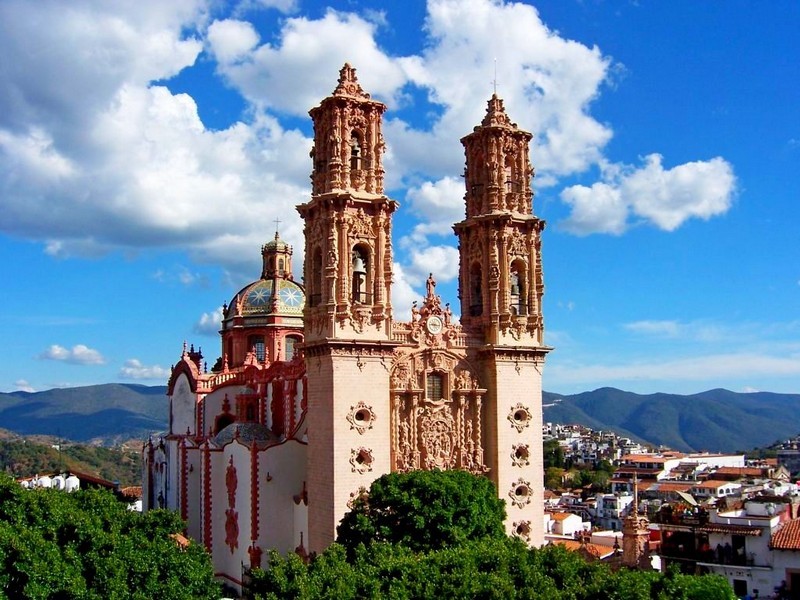
From pompous Baroque to pompous, but still a little more elegant style - Rococo. Eternal carnival, exquisite jewelry with mythical or erotic themes, gentle pastel colors.
so, Rococo style walls: ideal - fabric. If painting, then with fabric decorations, preferably silk. Lots of exquisite stucco moldings - white or gold.
As in the Baroque, in Rococo the ceiling continues the wall. And he also does not shy away from decorations - frescoes, patterns, stucco.
Floor - imitating marble or wood. Moreover, parquet and laminate flooring are suitable for almost any shape.. the main thing, so that their surface is glossy. Do not forget, in rococo everything should shine J. Carpets are also possible. But don't let them completely cover your luxurious floor..
Furniture: not massive, graceful - sofas and couches, sofas and couches, canapes and benches, so many, which can hardly fit a single figurine, beds with luxurious headboards. Ornaments and decor, varnish and no sharp forms - everything is soft and smooth.
The decor is clear what: gold, crystal and porcelain, mirrors and paintings, screens, puffs, silk pillows and stucco, stucco, a lot of stucco. Do not skimp on boxes of different shapes and sizes - there should be a lot of them. By the way, innovation from the rococo style - aquariums.
Rococo, as we wrote above, not as pompous as his palace predecessor Boroko, but even with him it is important not to overdo it with curls 🙂
Where to see Rococo?
for instance, in Potsdam, in Germany there is such a wonderful Chinese house.

Or even in Lviv, so as not to travel far - St. George's Cathedral.



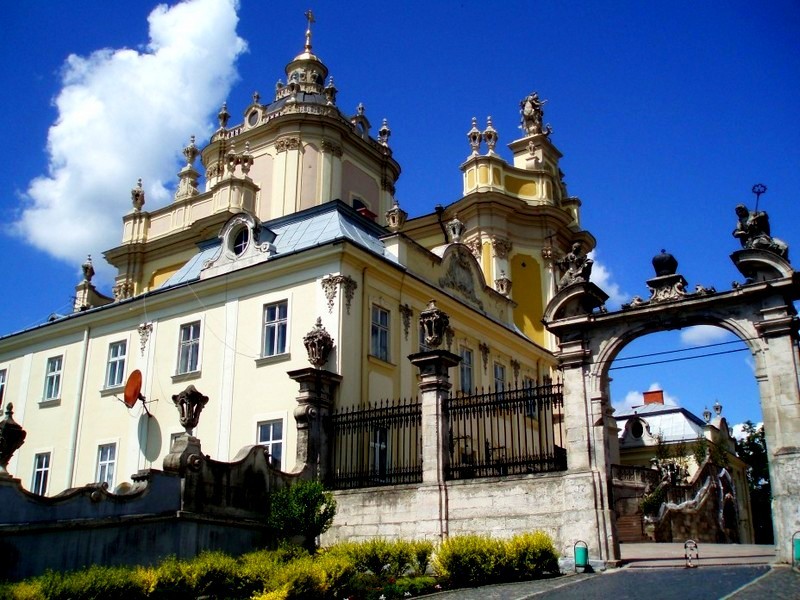
Well, enjoyed the luxurious Baroque and elegantly luxurious Rococo, and we fly on.
Classicism. Restrained, symmetric, noble and dear. Light and warm colors.
Walls of classicism: fabric and wallpaper, this very fabric imitating. Or paint - warm colors. Since the classicists were inspired by antiquity, then the walls in the style of classicism can be decorated with frescoes, eg, or stucco. A la antique columns - marble or granite — also nobody canceled.
Ceiling: pastel or white. Can be with stucco.
Floor: ideal - parquet. For added warmth, you can add carpets..
Furniture: natural colors, graceful, but without an abundance of curls. The most characteristic of classicism ensemble: mahogany with bronze finish.
The decor is no less discreet, but at the same time quite strict: mirrors in expensive frames, cornices (necessarily beautiful expensive cornices!), curtains with lambrequins. Porcelain and books, paintings and fine antiques. So if you dream of a classicist interior, find out, where are the nearest antique shops 🙂
Talking about classicism, one cannot but say a few words about his follower - neoclassicism. We would call it "classicism for the not rich". It allows for cheaper furniture and finishes. And still remains strict and symmetrical.
Where to admire examples of classicism?
for instance, in Munich: in the photo — input Koenigsplatz square gate. Obviously, that the Athenian Parthenon is taken as a basis.



Or in St. Petersburg. Tauride Palace



And also in London - a park in the classicism style is laid out in the Osterley mansion..

History always repeats itself. Interior history, as we see, also. Therefore, the strict and restrained classicism was replaced by a brilliant style. empire, style of the era of Napoleon Bonaparte. It is not for nothing that the main colors of the Empire style are bright red., blue and white - the colors of the Napoleonic flag.
Empire style walls: silk (or its imitation) bright colors. You can still poke the walls, of course, in bright color.
At the same time, the ceiling can be white or cream.. You should not be zealous with stucco.
Floor: only parquet.
Furniture: polished, massive, lush, lavishly decorated with carvings, lion paw decor, columns, cornices or with silk upholstery. And most importantly - her, furniture, there should be a lot.
Decor: figurines, figurines, caskets, vases, vases and candy bowls, porcelain and crystal. Chandeliers are also crystal, with pendants. Curtains - massive. Mirrors - a lot. Fireplace, ideal - marble, decorated with images of lions, eagles or something equally majestic.
So you understand, Empire style is hardly suitable for a small city apartment with a low ceiling. Rather, for a country house - following this style, you will not live in the house, but in a real palace.
It is not for nothing that at the very beginning of our story about the Empire style, we mentioned Monsieur Bonaparte - and it is not at all difficult to guess, that you can admire the Empire style in France.
Here are some examples.
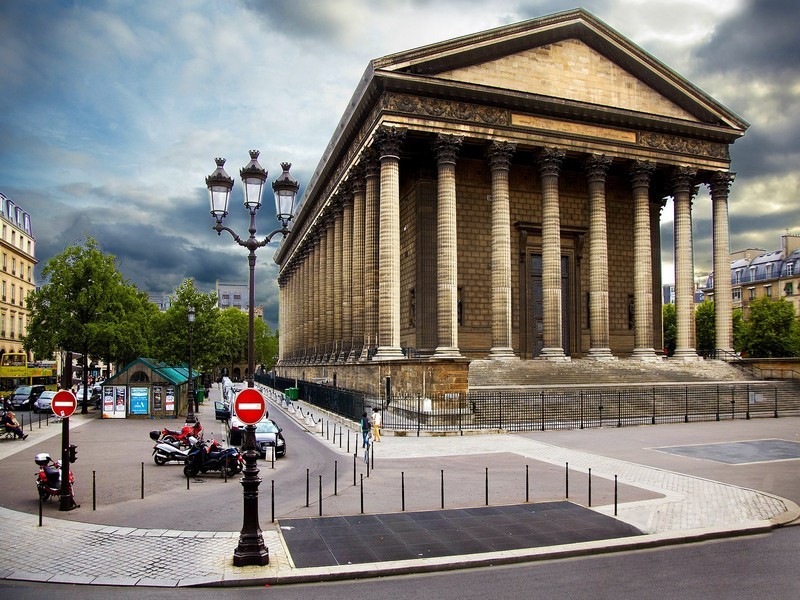
Church of Saint Madeleine (Saint Mary) in Paris



Or fountain in the Châtelet square. Where? Of course, in Paris.

Well, the famous Triufal Arch in Paris - also an example of the Empire style.

Here we have almost completed the review of classic styles in the interior.. The journey was not short - we started then, when, it seems, nothing has happened yet. And let's finish with the "youngest" interior classic. Late 19th - early 20th centuries. The world is changing. Into art, architecture, comes to life Modern (art nouveau).
Modern, it seems, does everything, to smash the classics. He is asymmetrical and kind of crooked. But at the same time functional and non-conservative. Probably, that is why it is so popular to this day. And the most, among classic styles, suitable for modern dwellings.
Art Nouveau walls: ideal - split in two. At the bottom - a ceramic or oak panel, and at the top - fabric or dyeing. If this approach is too complicated, modern allows wallpaper neutral, soft tones. Can with a picture of plants (by the way, it is plants that are the main feature of modernity) - climbing plants, unfolding lines, stems and leaves.
Ceiling: many options, the main thing, so that it attracts (but did not distract at the same time!) Attention. for instance, stretch ceiling with an interesting chandelier. Or even dark wood beams. Or stained glass.
Floor: herringbone or square parquet - modern classics.
Furniture: comfortable! Smooth lines, mirror or mother-of-pearl inserts, colored glass.
Decor: animal figurines, mosaic, paintings in the style of ... modern 🙂
If we talk about places, where you can be inspired by modernity and enjoy it, then they are in the world ... But, probably, need to go to town, which we personally associate with modernity ... To Barcelona, of course! And watch, watch, look at the creations of the great Gaudi - a real singer of the Art Nouveau style.
And we ask you, do not limit yourself to the Sagrada - by arriving in Barcelona, see Gaudí's creations to the maximum. Believe me, they will amaze you no less than the Sagrada Familia.
Hardly anyone will remain indifferent, looking at Casa Batlló, fantastic and lovely.

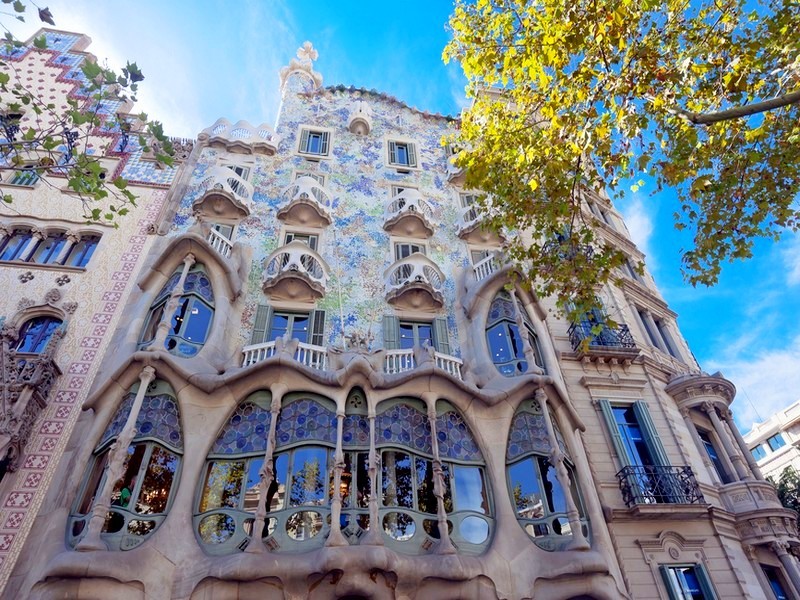
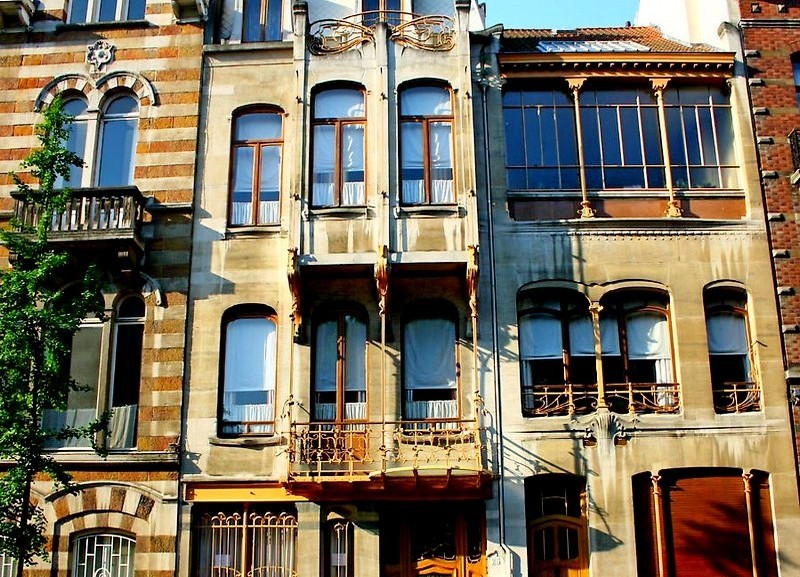
But do not forget at the same time, that “Gaudí is not alone in the Art Nouveau” ... There is also the founder of the style - the Belgian architect Victor Orta. You can see his creations in Belgium.
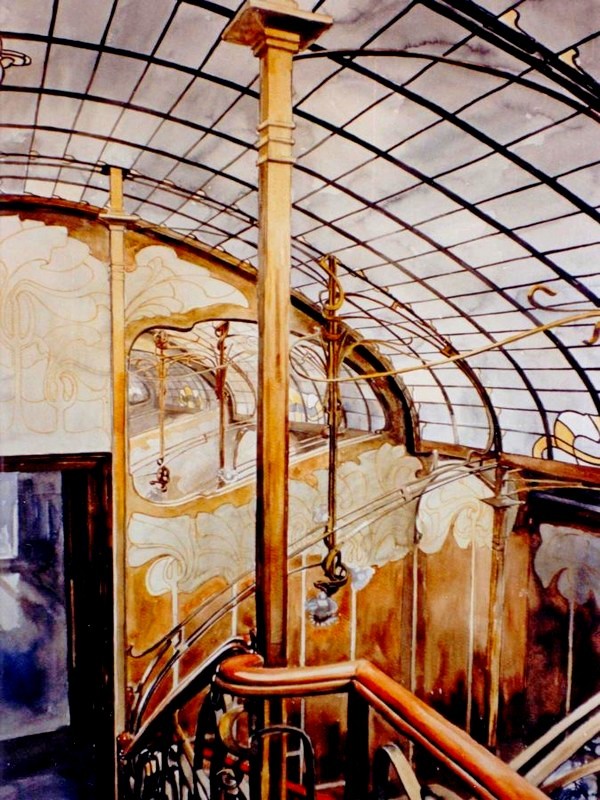
for instance, Tassel's house in Brussels.

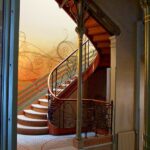


Or house most Medium, in the same place, in Brussels. Now it is, by the way, house-museum.



In general, we tried to tell you about the classic styles in the interior.. And prompt, where to go, to be inspired by them. And then everything depends on you. Globe and fantasy to help you 🙂
With inspiration,
Your SvitHome